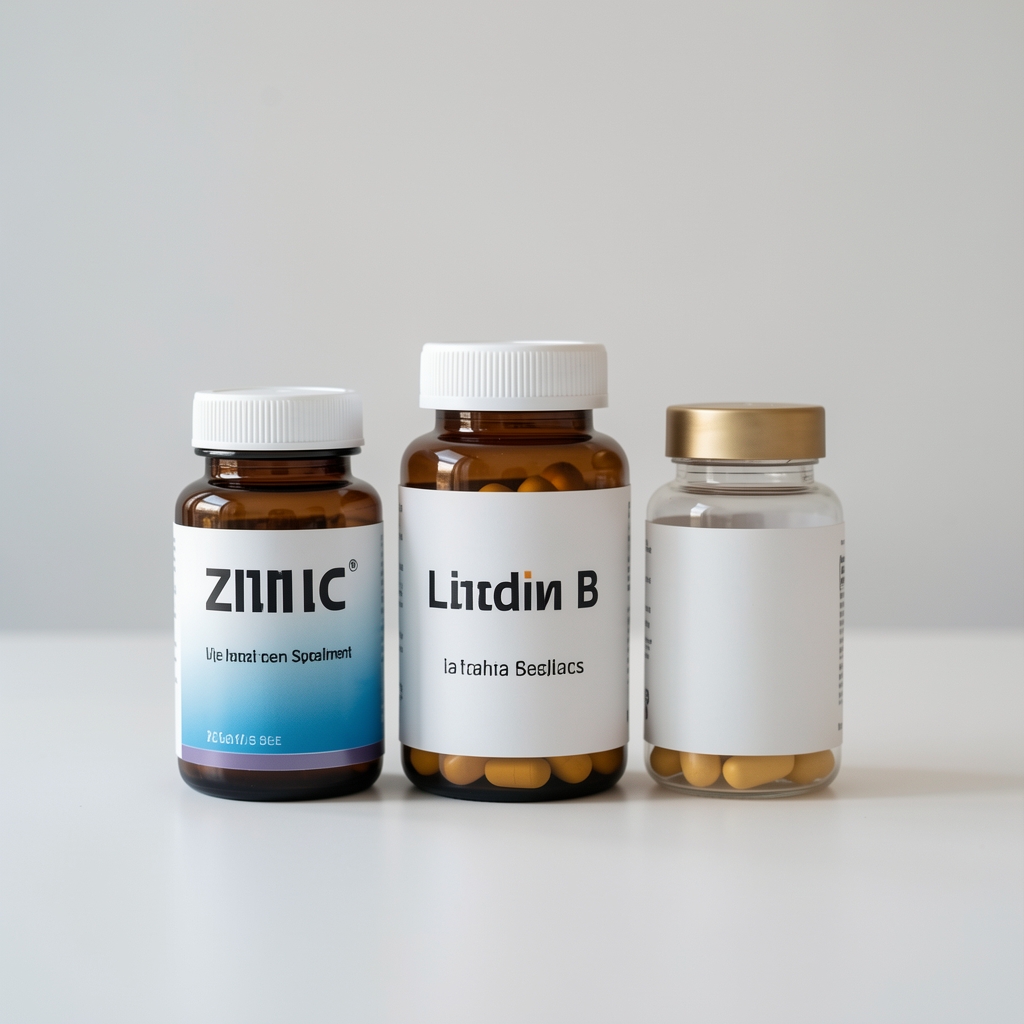
Among the nutrients that appear consistently in discussions of men's daily supplement routines, zinc and the B-vitamin complex occupy a particular position: both contribute to fundamental aspects of nutritional balance, yet both are frequently misunderstood, overclaimed about, or simply overlooked in favour of more prominent entries on the supplement shelf. An editorial review of published nutritional research suggests a more measured picture.
Zinc in the Active Man's Routine
Zinc is a trace mineral that contributes to nutritional balance across a range of biological processes. For active men, its role in supporting recovery rhythms after physical exertion is among the most frequently cited reasons for inclusion in a daily supplement stack. Published nutritional research notes that zinc participates in enzymatic activity associated with protein synthesis, making it a logical consideration alongside resistance training habits.
The challenge with zinc, as with many micronutrients, is that its presence in whole foods is often sufficient for men who maintain a varied dietary pattern. Red meat, shellfish, legumes, seeds, and dairy products all contribute meaningfully to daily zinc intake. The question of supplementation, then, becomes most relevant for men whose dietary variety is limited — whether through preference, travel schedules, or the demands of an intensive training routine.
From an editorial standpoint, the most responsible framing positions zinc as a complement to a whole-food-first approach rather than a replacement. Supplement as addition, not substitution, remains the guiding principle of nutritionally aware journalling in this space.

The B-Vitamin Complex: Eight Nutrients, One Category
The B vitamins are not a single compound but a family of eight water-soluble nutrients: thiamine (B1), riboflavin (B2), niacin (B3), pantothenic acid (B5), pyridoxine (B6), biotin (B7), folate (B9), and cobalamin (B12). Each contributes to daily focus and energy awareness through distinct metabolic pathways, yet they are so frequently grouped together — and sold together in B-complex supplements — that their individual roles can blur.
For active men, B12 and B6 are among the most commonly discussed. B12 contributes to red blood cell formation and the normal functioning of the nervous system — both relevant for men engaged in endurance and resistance activities. B6 participates in amino acid metabolism, which is pertinent for those with high protein intake targets. Folate (B9) is less often discussed in men's supplement journalism but plays a role in DNA synthesis and cellular division, processes that accelerate during periods of intensive physical output.
Niacin (B3) warrants a separate note. Its role in energy metabolism is well-documented in published nutritional literature, and a small but growing body of research examines its contribution to cholesterol awareness — though the editorial position of this publication is that such discussions belong in the domain of qualified wellness professionals rather than supplement journalism.
"The B vitamins illustrate a recurring theme in men's supplement journalism: individual nutrients are rarely dramatic in isolation. Their contribution to daily energy awareness is cumulative and contextual."
Deficiency Patterns in Active Men
Both zinc and certain B vitamins are subject to depletion patterns that disproportionately affect physically active men. Sweat loss during intensive training carries minerals including zinc, while the elevated metabolic demands of regular physical output can increase the rate at which water-soluble B vitamins are utilised. These are not dramatic or immediate deficiencies but gradual shifts in nutritional balance that may express themselves as persistent fatigue, slower recovery rhythms, or reduced focus across the working day.
The pattern is well-enough established in published nutritional research that it forms the basis for much of the men's supplement stack guidance that circulates in fitness communities. The editorial approach here is to note the pattern without overstating its inevitability: deficiency is not assured by regular training, and dietary adjustments often address the gap before supplementation becomes relevant.
Men who train five or more days per week, follow a calorie-restricted intake, or consume predominantly plant-based diets are the population most consistently identified in nutritional research as benefiting from zinc and B-vitamin supplementation. Outside these specific contexts, the case for supplementation is more a matter of nutritional insurance than demonstrated necessity.
Supplement Form and Absorption Considerations
Not all zinc supplements present the same absorption profile. Zinc picolinate and zinc citrate are among the forms most commonly cited for their absorption characteristics in nutritional literature, while zinc oxide — often the cheapest option on the shelf — is generally considered less bioavailable. For men approaching supplementation with genuine intention rather than reflexive purchase, the form on the label is worth noting.
For B vitamins, the distinction between cyanocobalamin and methylcobalamin in the B12 category is similarly worth understanding. Methylcobalamin is the active form found naturally in foods; cyanocobalamin is the synthesised form used in most mass-market supplements. The difference in practical outcome for most men is likely modest, but for those with specific absorption patterns, the active form is often preferred by qualified wellness professionals.
A practical consideration for men incorporating both zinc and B vitamins into a daily stack is timing. High doses of zinc taken without food can cause gastrointestinal discomfort — a common point of friction for men new to supplementation who abandon the habit prematurely. Taking zinc alongside a meal that includes some fat content is among the most consistent pieces of practical guidance in nutritional awareness writing on this topic.
- 01 Zinc contributes to nutritional balance in active men; supplementation is most relevant for those with limited dietary variety or intensive training schedules.
- 02 The B-vitamin complex comprises eight distinct nutrients; B12, B6, and folate are among the most relevant for men with active routines.
- 03 Supplement form influences absorption; zinc picolinate and methylcobalamin are forms with stronger absorption notes in published nutritional literature.
- 04 Taking zinc alongside a meal is a consistent practical recommendation across nutritional awareness writing in this category.
Stacking Zinc and B Vitamins with the Broader Routine
For men who have already established a foundation of vitamin D, omega-3, and magnesium in their daily routine, the addition of zinc and a B-complex supplement represents a logical extension of the stack. The editorial perspective here is one of sequencing: establishing the foundational supplements first, observing how the body responds over two to four weeks, and then layering additional nutrients rather than beginning with a comprehensive stack from day one.
This graduated approach has a practical advantage beyond the physiological: it makes cause and effect more legible. When a man who has been taking zinc and B vitamins for six weeks notices an improvement in his daily energy rhythm, the probability that he can attribute that observation to a specific addition is meaningfully higher than if he introduced five new supplements simultaneously.
Supplement journalling — keeping even a basic record of what was taken, when, and any observable changes in energy, recovery, or focus — is among the most underused practices in men's wellness routines. It costs nothing and transforms a passive consumption habit into something resembling a genuine observational practice. That, ultimately, is the spirit in which this publication approaches the supplement space.

Budi Santoso writes on nutritional awareness and active lifestyle habits from Jakarta. His editorial focus is on evidence-informed supplement choices for men navigating high-output routines.
More from this author →